Skip to product information
1 of 3

IMRA Surgical

Gastric (Class III)

Gastric (Class III)

Regular price $588.00 AUD
Regular price Sale price $588.00 AUD
Sale Sold out
Shipping calculated at checkout.

Please note: this product is on pre-order will be ready for shipment in 4-6 weeks.

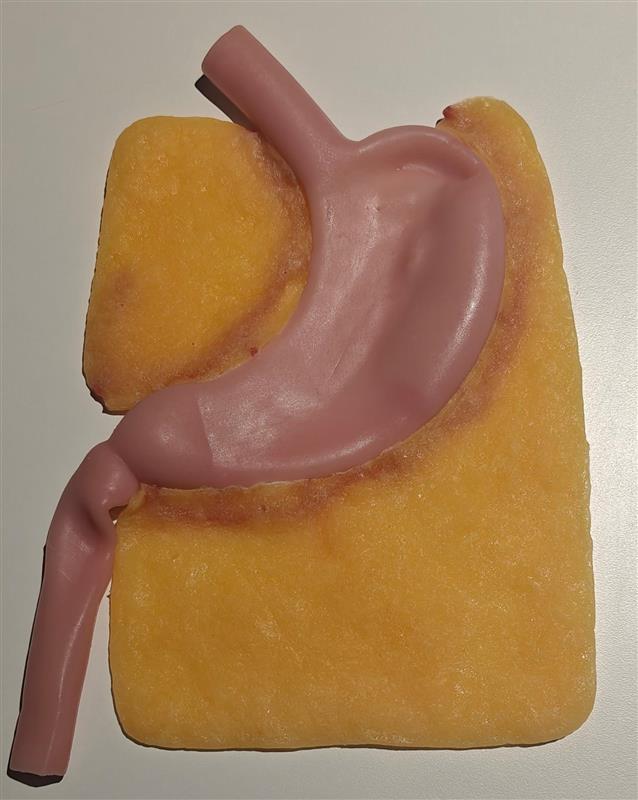
The Gastric Model is designed to simulate essential procedural steps for both sleeve gastrectomy and gastric bypass. The model includes a stomach with varying wall thicknesses to facilitate training with different staple sizes. This includes an over exaggerated thick lateral wall, allowing users to troubleshoot incorrect staple size selection. 

For sleeve gastrectomy, it supports port placement, mobilisation of the greater curvature, identification of the diaphragmatic hiatus, posterior mobilisation, bougie placement, creation of the stapled sleeve gastrectomy, endoscopy, and closure of the fascia and skin.

For gastric bypass, the model supports port placement, mobilization of the greater curvature, identification of the diaphragmatic hiatus, creation of a gastric pouch, creation of the biliopancreatic (BP) limb, jejunojejunostomy, gastrojejunostomy, and endoscopy. 

Features:

Anatomy:

  • Stomach with small length of oesophagus duodenum
  • Greater Omentum with left and right gastroepiploic and short gastric artery
  • Lesser Omentum (Hepatogastric ligament) with left gastric artery and vein

Key Training Steps:

  • Cutting: This model includes realistic fat tissue that simulates the omentum, complete with distinct, solid (not hollow) vessel structures suspended within. The entire omentum structure is connected to both the lesser and greater curvature of the stomach. The material is optimised for monopolar energy and also performs well when cut using bipolar energy. It is compatible with advanced bipolar and ultrasonic energy; however, these techniques are not ideal for use with this specific model.
  • Stapling: Compatible with a range of stapling technologies for both robotic and laparoscopic approaches. The superior lateral section along the greater curvature is intentionally thickened to allow demonstration of staple failures and size troubleshooting for new learners. The oesophagus is open-ended and compatible with bougie insertion.
  • Suturing: An anastomosis of the small bowel to the stomach can be performed using a segment of duodenum to simulate a bypass. Surgeons may use either barbed or non-barbed sutures, and the tissue has been designed to respond with anatomically realistic tension. The stomach and small intestine feature two visually distinct layers (with different colours) to allow surgeons to ensure that a proper anastomosis is achieved, with no mucosal layer left exposed.
View full details